
A Neighborhood with a Modern Avon Story
Regency Estates is one of those Avon neighborhoods that reflects how quickly Hendricks County has changed while still feeling connected to the community’s older roots. Located near County Road 200 North and Ronald Reagan Parkway, the subdivision is part of the newer residential landscape that emerged as Avon transitioned from a rural crossroads into one of west-central Indiana’s most active suburban communities.
Unlike historic neighborhoods built around nineteenth-century homes, churches, or railroad depots, Regency Estates represents a different kind of local heritage: the story of families putting down roots during Avon’s major growth era. Its streets, including Regency Boulevard, Thames Drive, and Foudray Circle, now form a familiar residential setting for homeowners who value newer construction, nearby schools, open space, and convenient access to the rest of town.
To understand Regency Estates, it helps to look first at Avon itself. The town grew around the meeting of U.S. 36 and what is now Avon Avenue, formerly State Road 267. Avon was incorporated in 1995, a milestone that coincided with increasing development pressure from the Indianapolis metropolitan area. As farms and open fields gradually gave way to subdivisions, Avon developed a reputation for strong schools, parks, shopping, and a comfortable distance from downtown Indianapolis.
How Regency Estates Got Its Name
There does not appear to be a publicly documented story explaining the exact reason the subdivision was named Regency Estates. That is not unusual in modern suburban development. Many neighborhood names were selected by developers to suggest a particular feeling or image rather than to commemorate one person or historic event.
“Regency” carries associations of elegance, order, and gracious residential living. In Regency Estates, the name is reinforced by street names such as Regency Boulevard and Thames Drive, which give the neighborhood a polished, cohesive identity. Thames, in particular, evokes English geography and adds to the subdivision’s traditional-sounding theme.
The name may not refer to a historic estate that once stood on the property. Instead, it is best understood as part of the neighborhood’s original branding: a name intended to make a new community feel established, distinctive, and welcoming. Over time, however, residents have given the name its real meaning through everyday life—children growing up together, neighbors watching one another’s homes, and families marking birthdays, graduations, and holidays on the same streets.
From Open Land to Residential Community
The most important milestone in Regency Estates’ history came during the 2010s, when the Town of Avon formally rezoned the neighborhood for single-family residential use. Town zoning records identify Regency Estates in a 2015 rezoning action, placing its official planning history in the middle of Avon’s continued expansion.
Home construction followed soon afterward. Property records and real-estate listings show homes in the subdivision dating from approximately 2017 forward. Early houses included properties on Thames Drive and Foudray Circle, with builders such as Westport Homes involved in the neighborhood’s initial development. Later phases included homes built by D.R. Horton, including residences completed around 2020 and 2021.
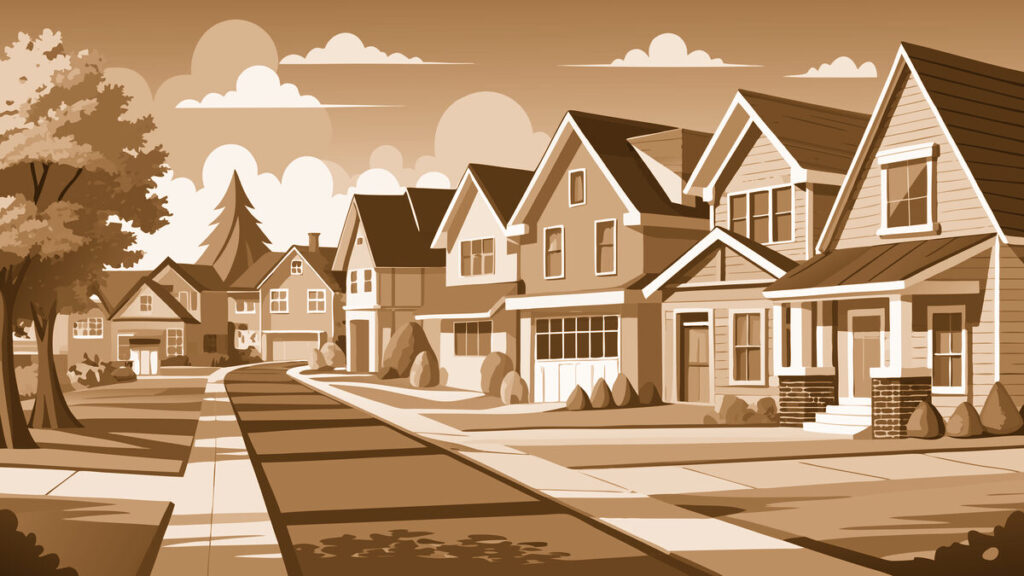
That timeline helps explain Regency Estates’ appearance. Rather than having a mixture of homes from many eras, the neighborhood has a consistent modern character. Houses commonly feature open-concept floor plans, attached garages, brick or vinyl exteriors, front porches, and yards designed for contemporary family life. At the same time, the development includes a variety of home sizes, from single-level ranch designs to larger two-story homes with additional bedrooms and flexible living spaces.
Streets That Give the Neighborhood Its Character
Regency Boulevard serves as the neighborhood’s main entrance and internal spine. It connects the subdivision to County Road 200 North and helps establish the first impression of Regency Estates with its broad residential layout and landscaped surroundings.
Thames Drive is one of the most recognizable streets in the community, with a number of homes built during the neighborhood’s early and middle phases. Foudray Circle, including both north and south sections, provides a quieter loop-style setting that is typical of many family-oriented subdivisions. These streets are more than addresses; they are the framework of neighborhood life.
A walk through Regency Estates reveals the gradual evolution of the development. Earlier sections have more established trees and landscaping, while newer portions show the clean lines and recently planted greenery associated with developing neighborhoods. As the trees mature and homeowners personalize their yards, the community will gain a more settled appearance and an even stronger sense of place.
Nearby Parks, Schools, and Community Institutions
One of Regency Estates’ defining features is its relationship to Avon’s broader network of public amenities. The neighborhood is near Avon Town Hall Park, a central community gathering place with open areas and recreational opportunities. Town Hall Park has become one of the visible symbols of Avon’s civic growth, reflecting the town’s effort to provide public spaces alongside residential and commercial development.
Residents also benefit from proximity to the Avon-Washington Township Library, one of Hendricks County’s largest public libraries. The library is more than a place for books; it serves as a meeting point for educational programs, children’s activities, local history projects, and community events. The Town of Avon and the library have worked together on oral-history and historical-information projects, helping preserve the stories of the wider community.
Schools are another important part of Regency Estates’ identity. Neighborhood listings have associated homes with Avon Community School Corporation schools, including Avon Middle School North, Avon High School, and nearby elementary schools. School assignments can change, so families should always confirm current boundaries with the district, but the connection to Avon’s highly regarded school system has been central to the neighborhood’s appeal.
A Neighborhood Still Writing Its History
Because Regency Estates is relatively young, its heritage is still being created. There are no centuries-old buildings or famous historic markers within the subdivision. Instead, its history is found in the small details residents remember: the first families moving into newly finished homes, the first neighborhood gatherings, the early landscaping taking shape, and the arrival of children who knew no other hometown.
The neighborhood also reflects a larger transition in Avon. Fields that once supported the area’s agricultural identity have become streets, sidewalks, drainage ponds, yards, and parks. The growth has brought new conveniences and a broader population while preserving the town’s emphasis on schools, trees, recreation, and community involvement.
- Regency Boulevard provides the neighborhood’s primary connection to County Road 200 North.
- Thames Drive and Foudray Circle are among the community’s most recognizable residential streets.
- Avon Town Hall Park offers nearby public open space and recreation.
- The Avon-Washington Township Library connects residents with local programs and history.
- Ronald Reagan Parkway provides an important north-south transportation link for the area.
For longtime residents, Regency Estates may still feel like a newer chapter in Avon’s story. But every established neighborhood begins that way. With each passing year, the homes mature, the trees grow taller, and the memories multiply. What began as a planned residential development is becoming a lived-in community—one that captures the energy of modern Avon while gradually developing a heritage of its own.